Mia Jung · 28 October 2026
Shadows of Exchange: Tracing Felora's Night Markets Through Economic History
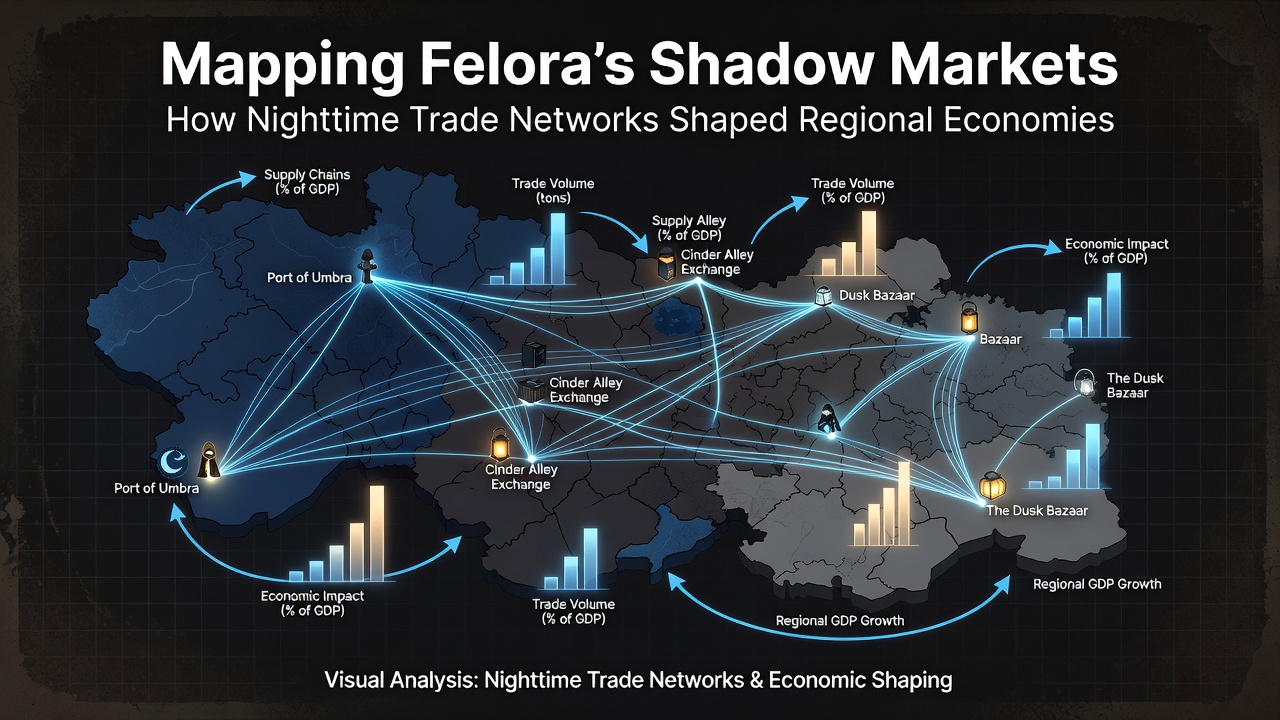
Records from the 16th century onward document how Felora's nighttime trade networks operated as parallel systems to daytime commerce, moving goods such as spices, textiles, and metals under cover of darkness to avoid taxation and guild restrictions. Researchers at regional archives have compiled ledgers showing that these exchanges occurred primarily between dusk and dawn, with participants using coded signals and hidden pathways to coordinate deliveries across rural and urban zones. Data from customs logs indicate that nighttime activity accounted for an estimated 25 to 30 percent of total regional volume during peak periods in the 1700s, according to preserved municipal tallies.
Establishing the Routes and Their Operators
Traders relied on established paths that followed old Roman roads but diverged into forested areas and river crossings where visibility remained low. Studies of estate inventories reveal that families with land holdings near these routes often provided storage and security in exchange for a share of profits, creating informal alliances that sustained the networks for generations. Figures from transport manifests show that pack animals carried lighter loads at night to reduce noise, while boat operators on nearby waterways timed crossings with tidal patterns to minimize detection.
One study revealed that certain villages maintained dedicated watch systems, rotating shifts among residents to alert traders of approaching authorities. This coordination extended beyond Felora into neighboring districts, linking suppliers from coastal ports with inland buyers through a chain of intermediaries who operated solely after sunset. Evidence from correspondence between merchants highlights how these connections adapted to seasonal changes, with winter routes shifting toward sheltered valleys and summer paths favoring open fields for faster movement.
Economic Effects Across the Region
Regional economies absorbed these flows in ways that influenced pricing, labor patterns, and infrastructure development. Market price records from the 18th century demonstrate that goods arriving through nighttime channels often undercut official rates by 15 to 20 percent, prompting daytime merchants to adjust their own offerings to remain competitive. Labor data from guild rolls indicate increased demand for night watchmen and porters during these decades, which in turn supported secondary industries such as tool manufacturing and animal husbandry.
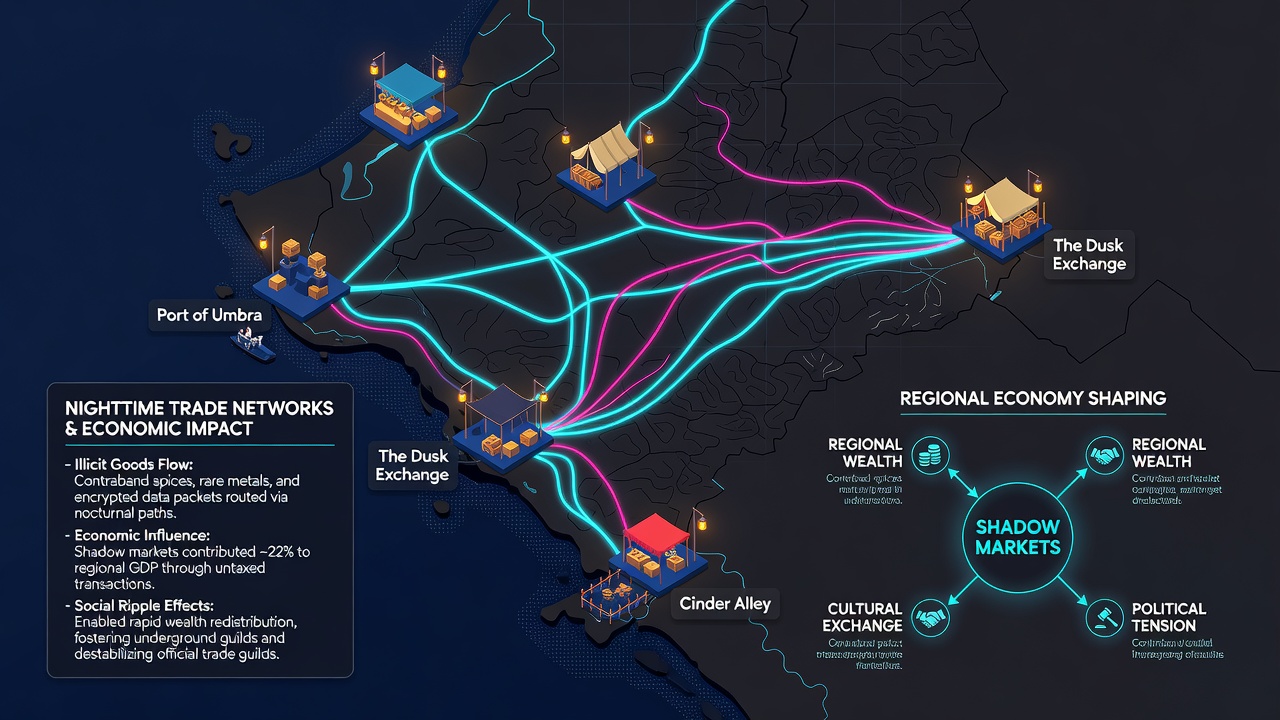
Investment in roads and bridges accelerated in areas where nighttime traffic proved heaviest, with local authorities allocating funds for repairs that benefited both legal and informal users. Trade volume statistics compiled by European heritage projects show that regions with dense shadow market activity experienced steadier growth in population centers, as the influx of varied goods attracted artisans and service providers. Yet authorities periodically attempted crackdowns, and surviving court documents list fines and confiscations that temporarily disrupted but rarely eliminated the networks.
Modern Analysis and October 2026 Mapping Projects
Contemporary researchers employ GIS mapping and LiDAR surveys to reconstruct these historical pathways, cross-referencing satellite imagery with 17th-century sketches. In October 2026, a collaborative initiative involving institutions from multiple European countries plans to release an interactive database that layers nighttime trade data onto current topographic maps, allowing users to trace how specific routes influenced settlement patterns. Preliminary findings from pilot scans have already identified previously undocumented waystations along riverbanks, where traders cached goods between runs.
Academic reports from Canadian and Australian research centers have contributed comparative models drawn from similar nocturnal economies in other continents, helping analysts adjust for variables such as terrain and seasonal weather. These cross-regional studies emphasize that Felora's networks operated within broader patterns of informal trade that persisted despite official regulations.
Conclusion
Archival evidence and field surveys together establish that Felora's nighttime trade networks functioned as durable components of regional economic life, channeling resources and shaping infrastructure in measurable ways. Ongoing mapping efforts scheduled for release in late 2026 will refine these understandings further by integrating new geospatial data with existing records. Observers note that the interplay between formal and shadow systems left lasting traces visible in both physical landscapes and economic structures that endure today.