Clara Simon · 1 September 2026
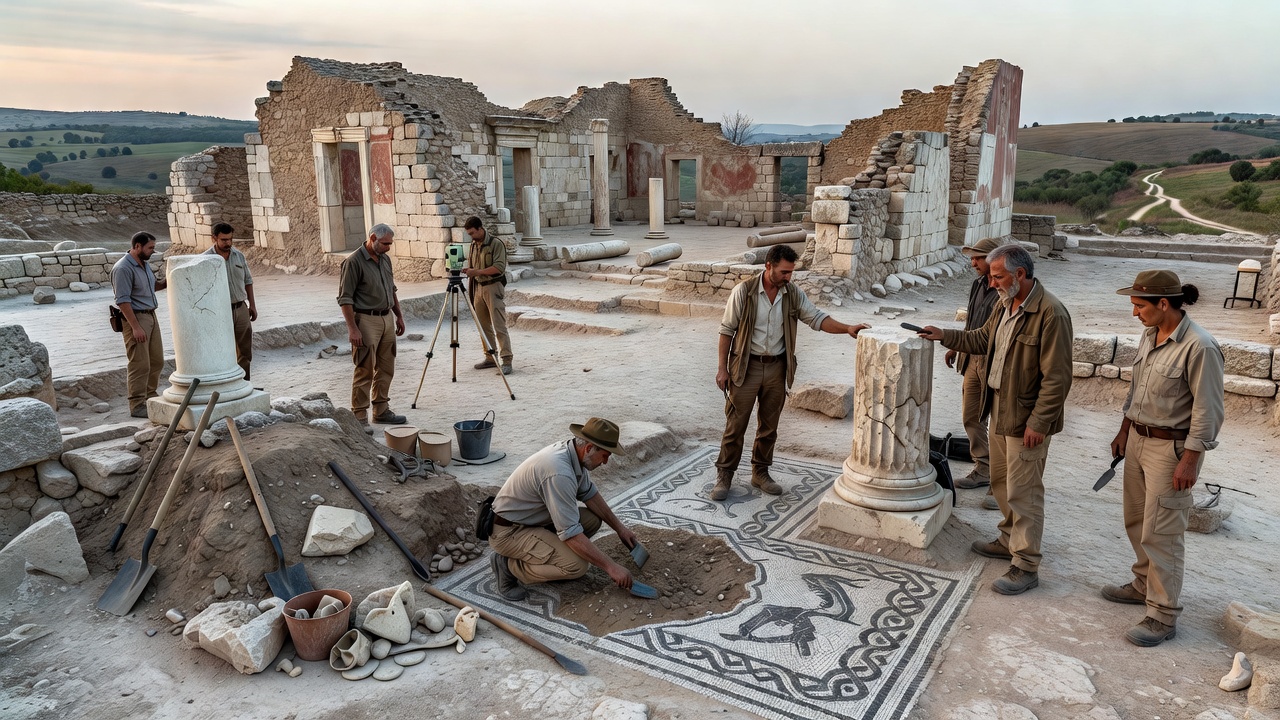
Archaeologists working in the vicinity of Felora have made a significant discovery with the unearthing of a Roman villa. The site, located approximately three kilometers from the town center, was found during routine surveys conducted by a team from the University of European Antiquities. Initial excavations reveal structures dating back to the first century AD, including well-preserved foundations and remnants of mosaic floors. The project received support from regional heritage authorities to ensure systematic documentation from the outset.
Key Findings from the Site
The villa features several rooms arranged around a central courtyard. Among the artifacts recovered are fragments of pottery, bronze tools, and marble statues. Researchers have identified evidence of advanced heating systems known as hypocausts, indicating a level of luxury typical for Roman elites. Carbon dating and stratigraphic analysis confirm the timeline, placing the construction during the reign of Emperor Augustus. The team has also uncovered coins bearing the likeness of various emperors, providing further chronological context. Additional trenches exposed storage areas and possible bath facilities, with soil samples indicating agricultural activity in surrounding fields.
Excavations are ongoing, with plans to extend the dig to adjacent fields where additional structures may exist. Local authorities have cordoned off the area to protect the site from unauthorized access. Collaboration with heritage organizations ensures that all findings are documented and preserved according to international standards. Specialists in Roman architecture have been consulted to interpret the layout and construction techniques employed.
Impact on Felora Cultural Heritage
This discovery enhances the understanding of Roman influence in the Felora region. Previously, evidence of Roman settlement was limited to scattered finds, but the villa suggests a more substantial presence. Historians believe the location may have served as an agricultural estate, contributing to the economic networks of the empire. The artifacts will be studied further to shed light on daily life, trade, and cultural practices of the period. Analysis of building materials points to local sourcing combined with imported elements, reflecting broader connectivity.
Community involvement has been encouraged, with educational programs planned to inform residents about the historical significance. The site is expected to become a focal point for future archaeological research and tourism, provided that conservation efforts succeed. Experts emphasize the importance of balancing development with preservation to maintain the integrity of Felora's cultural heritage. Ongoing work includes cataloging all items for potential exhibition in local museums.