Clara Simon · 1 September 2026
Archaeologists have made a significant discovery near the town of Felora, unearthing the remains of a well-preserved Roman villa. The site, located approximately five kilometers from the center of Felora, has revealed structures dating back to the first century AD. This find adds to the rich tapestry of cultural heritage in the region.
Excavation Findings
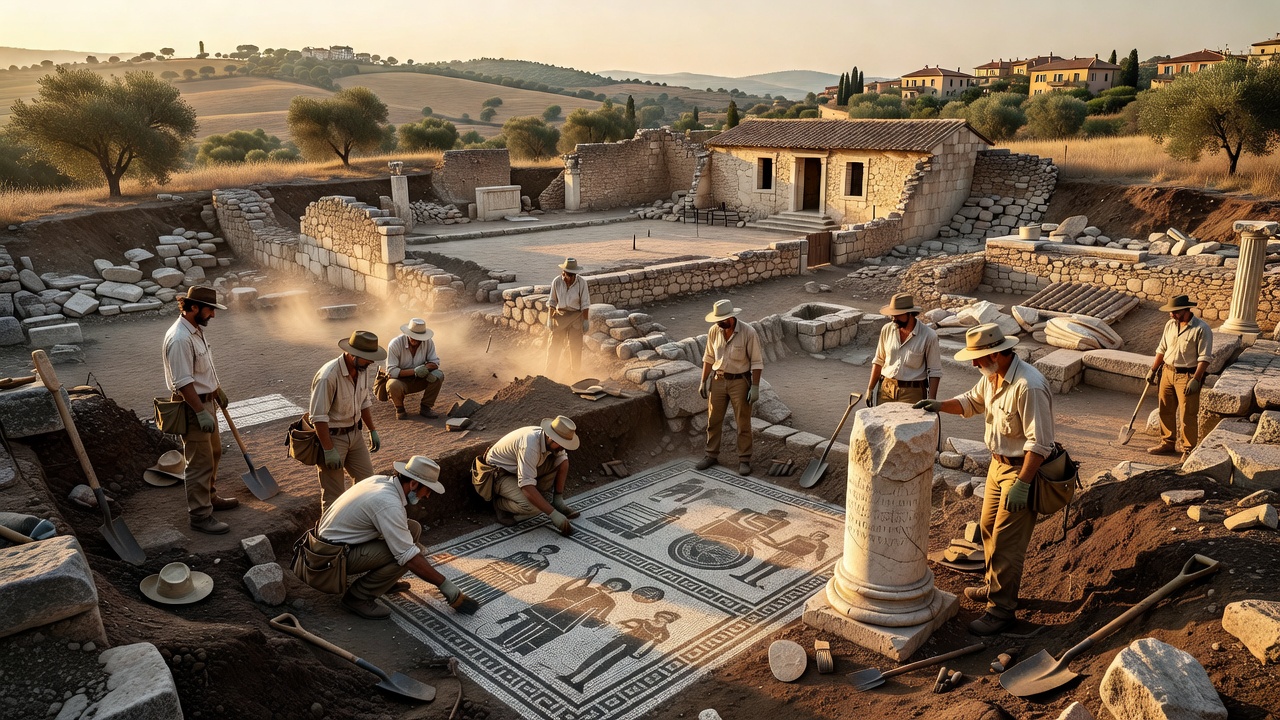
The excavation team, led by Dr. Elena Vargas from the University of Rome, began work last spring after local farmers reported unusual artifacts in their fields. Initial surveys indicated the presence of mosaic floors and stone walls typical of Roman architecture. Over the past months, researchers have uncovered several rooms including a triclinium, or dining area, adorned with intricate mosaics depicting mythological scenes. Additionally, pottery shards, coins, and tools have been recovered, providing insights into daily life during the Roman period. The villa appears to have been occupied until the third century before being abandoned, possibly due to economic changes or invasions.
Further analysis of the site suggests it was part of a larger estate, possibly used for agricultural purposes. Evidence of olive presses and storage facilities points to the production of olive oil, a staple of the Roman economy. The preservation of the site is remarkable, with many walls standing up to two meters high in some areas. The team continues to document every find meticulously to build a comprehensive picture of the villa's layout and function.
Impact on Felora Heritage
This discovery has profound implications for understanding the history of Felora and its surrounding areas. Felora, known for its medieval and Renaissance influences, now gains a deeper Roman connection that could attract more scholars and tourists. Local authorities are planning to protect the site and potentially develop it into an archaeological park. Collaborations with international institutions are underway to ensure proper conservation techniques are applied. The find underscores the importance of ongoing archaeological efforts in preserving cultural heritage.
Experts believe that more discoveries may lie beneath the surface, waiting to be revealed in future digs. Community involvement has been high, with volunteers assisting in the careful sifting of soil for small artifacts. Educational programs are being developed to inform the public about the Roman history intertwined with Felora's past. This villa not only enriches the narrative of the area but also highlights the continuous human settlement and cultural evolution in this part of Europe. Preservation efforts will focus on maintaining the integrity of the mosaics and structural remains for generations to come.