Sam Werner · 30 September 2026
How Felora's Trade Guild Records Illuminate 17th Century Spice Routes
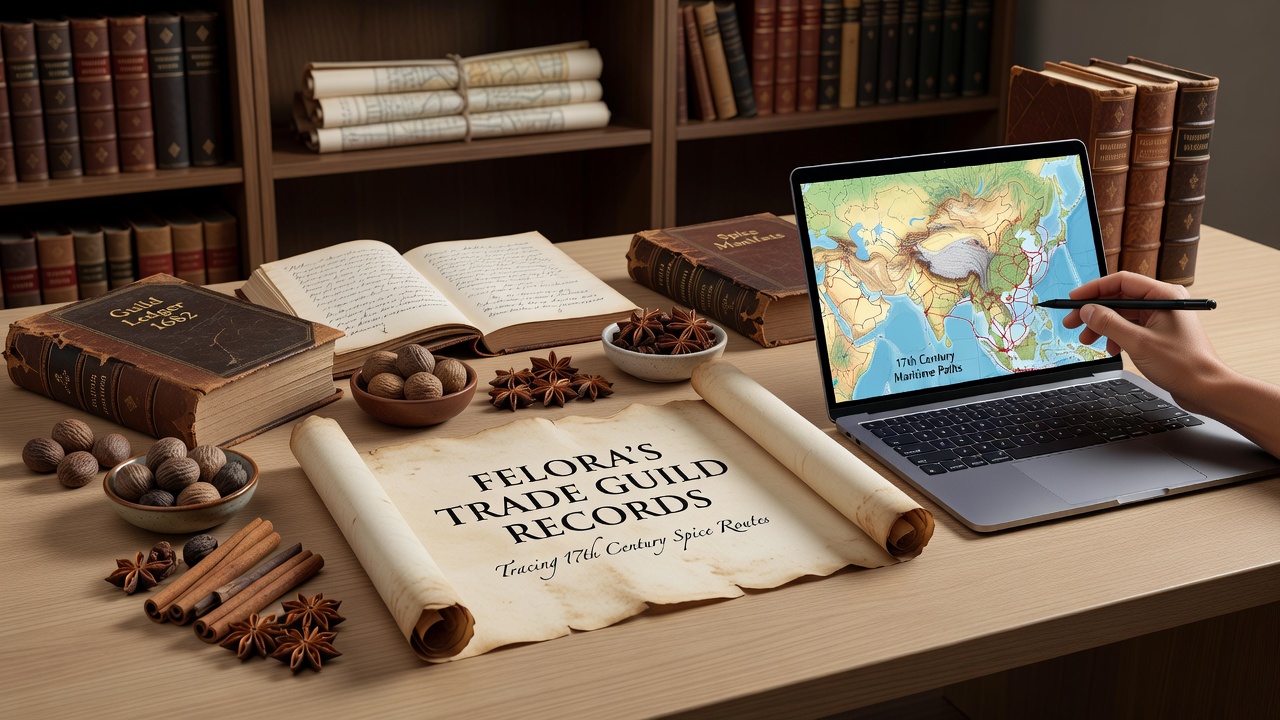
Researchers have turned to Felora's trade guild records as a key resource for mapping the flow of spices across continents during the 1600s, and these documents detail shipments, merchants, and ports that connected European markets with sources in Asia and beyond. The archives contain ledgers that list cargo manifests for nutmeg, cloves, pepper, and cinnamon while noting the vessels that carried them through established sea lanes and overland paths that changed with political shifts and seasonal weather patterns.
Contents of the Guild Ledgers
Felora's trade guild maintained detailed entries that recorded the origin of each spice batch, the date of arrival, the purchasing merchant, and the final destination within regional distribution networks; clerks noted weights, qualities, and prices paid at each transaction point, which allows modern analysts to reconstruct supply chains that stretched from the Moluccas through Indian Ocean ports and into Mediterranean hubs. These records also capture fluctuations caused by monopolies held by certain companies, as one entry from 1672 shows a sudden rerouting of clove shipments away from a blocked route near the Cape of Good Hope toward an alternate passage through the Red Sea.
Reconstructing the Pathways
By cross-referencing guild entries with port logs from other European cities, historians trace how spices moved in stages rather than direct voyages, and this layered approach reveals the role of intermediate traders who bought and resold goods at markup points along the way. Data from the Felora collection indicates that pepper volumes increased steadily through the 1660s, while cinnamon routes shifted eastward after conflicts disrupted traditional stops in the Persian Gulf. Observers note that such patterns emerge only when multiple ledgers are compared over decades, since single-year snapshots miss the adjustments merchants made in response to new treaties or fleet losses.
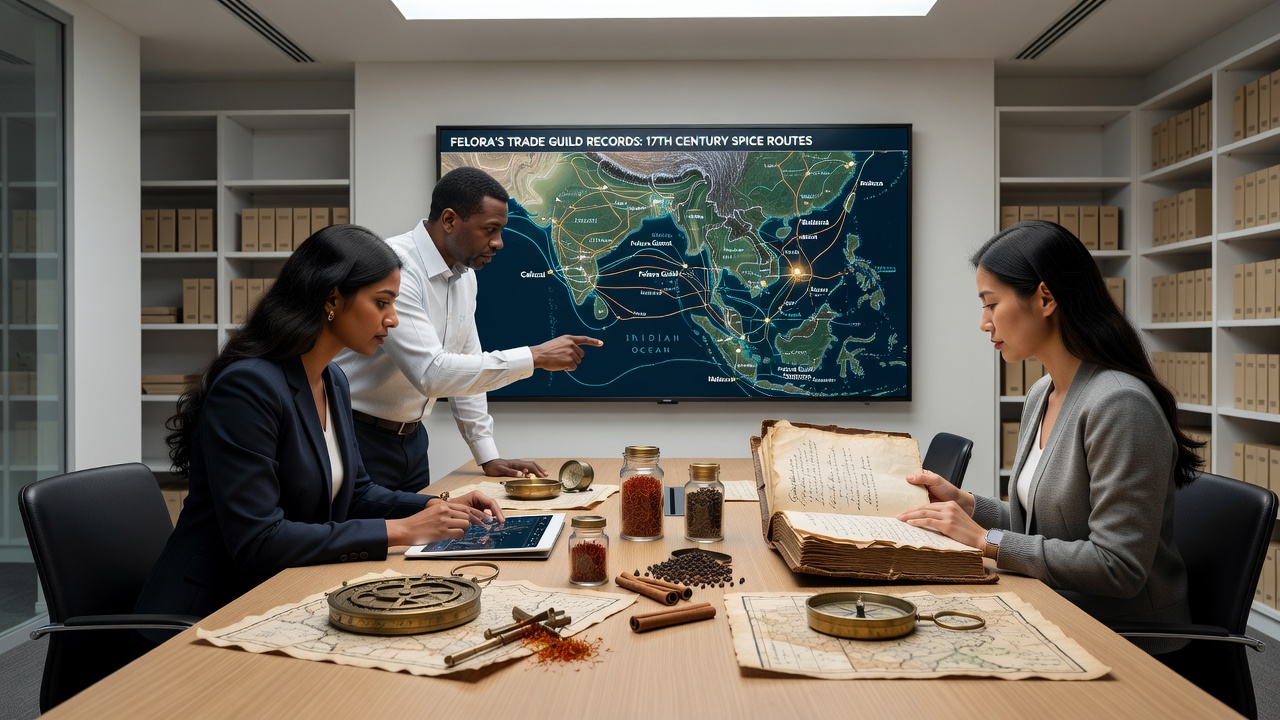
Archivists have begun digitizing the full set of volumes in preparation for a public database launch scheduled for September 2026, and this effort will let researchers from distant institutions query the same datasets simultaneously. The project draws on standards developed by the National Archives of Australia for handling fragile paper records, while additional guidance comes from the Rijksdienst voor het Cultureel Erfgoed in the Netherlands on metadata practices for trade documents.
Connections to Broader Networks
Entries also mention partnerships between Felora-based traders and agents operating out of Lisbon and Antwerp, which extended the reach of local guilds into Atlantic shipping lanes that carried spices onward to the Americas. One ledger notes a 1658 consignment of nutmeg that traveled first to a warehouse in Venice, then crossed the Alps by mule train before reaching buyers in Frankfurt. Such multi-leg journeys appear repeatedly in the records and demonstrate that spice routes rarely followed straight lines on a map but instead followed lines of credit and established merchant relationships.
Additional context comes from a 2023 study published by the University of British Columbia, which analyzed similar European guild collections and found that route changes often coincided with shifts in monsoon timing or new alliances between local rulers and trading companies. Felora's materials add granular detail to those broader conclusions by supplying names of individual ship captains and the exact quantities each vessel carried on specific dates.
Challenges in Interpretation
Many pages show ink fading or water damage that obscures key figures, yet conservators have recovered partial data through multispectral imaging techniques that distinguish original writing from later annotations. Gaps remain where entire years went unrecorded because of guild disputes or city fires, and researchers compensate by drawing on complementary sources such as customs rolls from neighboring regions. These limitations mean that any reconstruction of the full network stays provisional until more documents surface or existing ones receive further analysis.
Conclusion
Felora's trade guild records continue to supply concrete evidence for the movement of spices in the 17th century, and the upcoming digitization will expand access while preserving the originals for future study. Cross-referencing with external archives strengthens the picture of interconnected routes that adapted to changing conditions across decades. The September 2026 database release marks a practical step toward wider examination of these historical pathways.