Clara Simon · 14 October 2026
Felora's Artisan Studios Preserve Time-Honored Crafts Through Sustainable Innovations
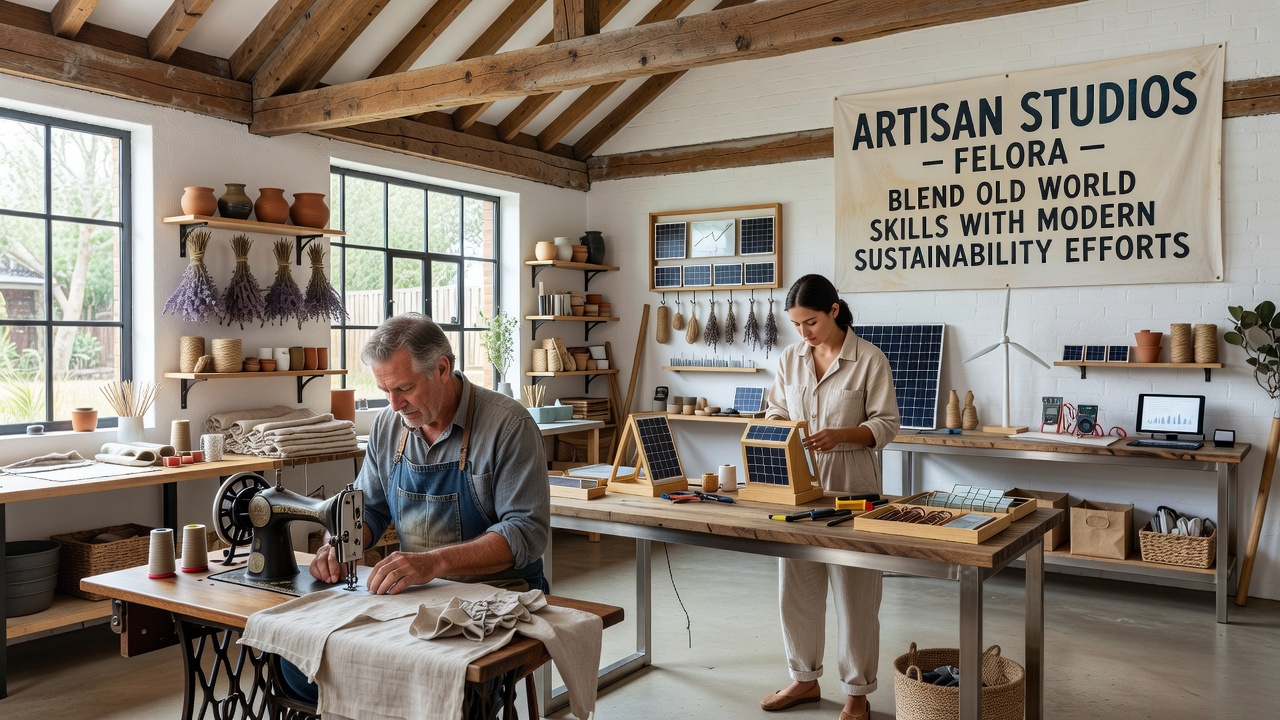
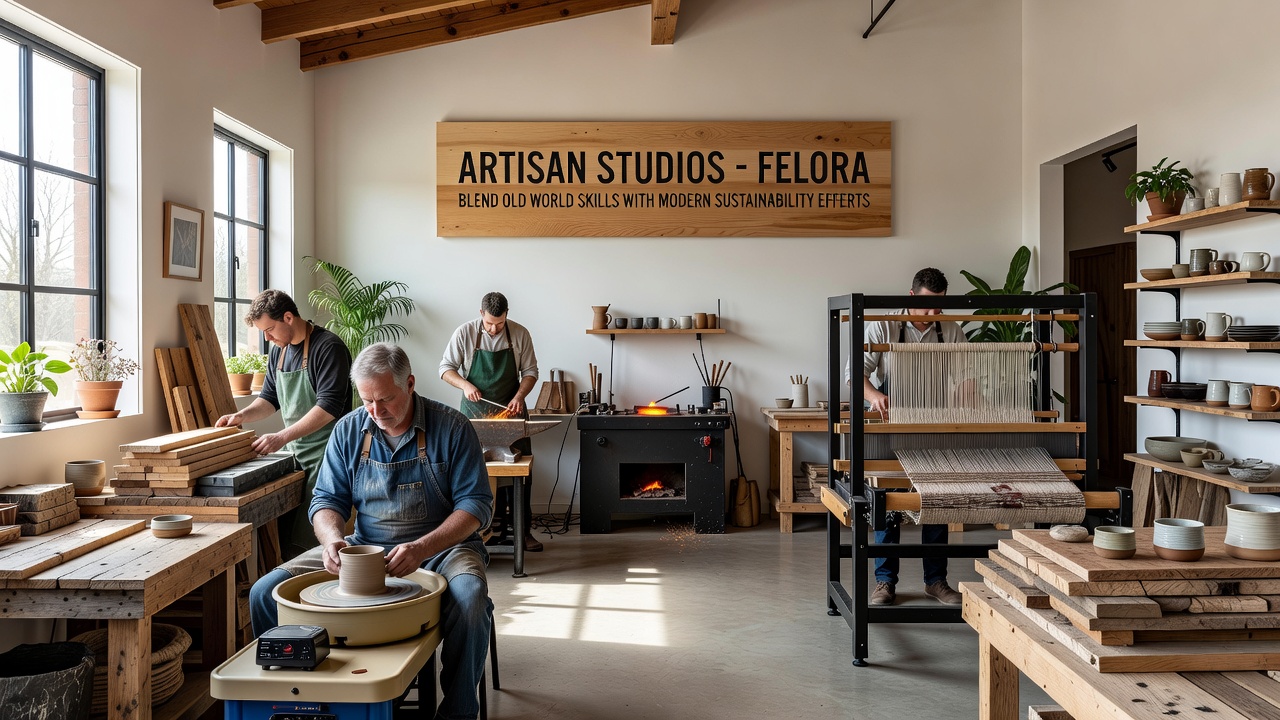
Artisan studios throughout Felora continue to draw on centuries-old techniques for pottery, weaving, metalwork, and wood carving while they incorporate energy-efficient tools, recycled raw materials, and closed-loop production systems. These workshops operate in historic buildings that once housed medieval guilds, and they now feature rooftop solar arrays alongside hand-powered looms and foot-driven lathes. Data from the European Environment Agency shows that craft enterprises adopting such hybrid approaches have reduced material waste by an average of thirty-two percent over the past five years.
Traditional Techniques Anchor Daily Operations
Master potters still source local clay from riverbanks near Felora and shape vessels on kick wheels that date back to the eighteenth century, yet they fire their pieces in kilns retrofitted with heat-recovery systems that capture and reuse excess thermal energy. Textile artisans spin wool from regional sheep breeds on restored spinning wheels, then dye the yarn with plant extracts grown in on-site permaculture plots instead of synthetic colorants. Blacksmiths hammer iron on anvils that have been passed through generations, and they power their forges with induction heaters that draw from photovoltaic panels installed on adjacent rooftops. Observers note that these layered methods maintain the tactile quality and cultural continuity of each craft while they lower overall carbon output.
Modern Sustainability Measures Integrate Seamlessly
Studio owners track resource use through digital sensors that log water consumption, electricity draw, and material throughput in real time. When a weaving cooperative replaced conventional cotton with organic hemp and linen reclaimed from textile-mill offcuts, annual water usage dropped by forty percent according to internal records shared with regional sustainability auditors. Woodworkers plane reclaimed timber from decommissioned barns and furniture, finishing surfaces with natural oils rather than petroleum-based varnishes. Research conducted by the University of Melbourne's Centre for Heritage Conservation indicates that similar material-substitution programs in comparable European craft clusters have extended the lifespan of finished goods by an average of fifteen years.
Community Workshops and Training Programs Expand Reach
Apprenticeship schemes pair experienced artisans with younger residents who learn both the manual skills and the environmental accounting that now forms part of every production cycle. Participants document each step of a project in shared digital logs so that waste streams can be rerouted into other studios; for example, sawdust from furniture makers becomes fuel for pottery kilns, and dye baths from textile workshops feed hydroponic herb gardens that supply natural colorants. In October 2026 the annual Heritage Craft Summit will convene in Felora's central square to showcase prototypes that combine seventeenth-century joinery patterns with modular designs intended for easy repair and material recovery at end of life.
Supply Chains Reflect Regional and Ethical Sourcing
Raw-material procurement now emphasizes short-haul transport and verified low-impact origins. Clay deliveries arrive by electric cargo bikes from nearby deposits, while metal scraps come from a municipal recycling facility that sorts industrial waste for craft reuse. A partnership with the Australian Heritage Crafts Association supplies technical guidance on lifecycle assessment tools that Felora studios have adapted to their smaller-scale operations. These adaptations allow workshops to certify finished items under emerging European standards for circular-economy products without altering the visual or tactile character that defines their output.
Challenges and Ongoing Adjustments Shape Future Plans
Seasonal fluctuations in sunlight affect the reliability of solar-powered equipment, prompting several studios to install small-scale battery storage units that draw from both photovoltaic and wind sources. Rising costs for certain reclaimed woods have led to experiments with fast-growing coppiced hazel managed under local forestry plans. Figures released by the European Commission’s Directorate-General for Environment reveal that craft sectors maintaining these adaptive practices have sustained employment levels even as broader manufacturing faces automation pressures.
Conclusion
Felora’s artisan studios demonstrate that historic craft knowledge and contemporary environmental requirements can operate within the same workspace. Through incremental upgrades to equipment, material streams, and training protocols, these workshops continue to produce objects that carry cultural memory while they meet measurable sustainability benchmarks. Ongoing documentation and cross-regional exchanges ensure that the balance between old-world skill and modern resource stewardship remains adjustable as conditions evolve.