Alex Jung · 1 September 2026
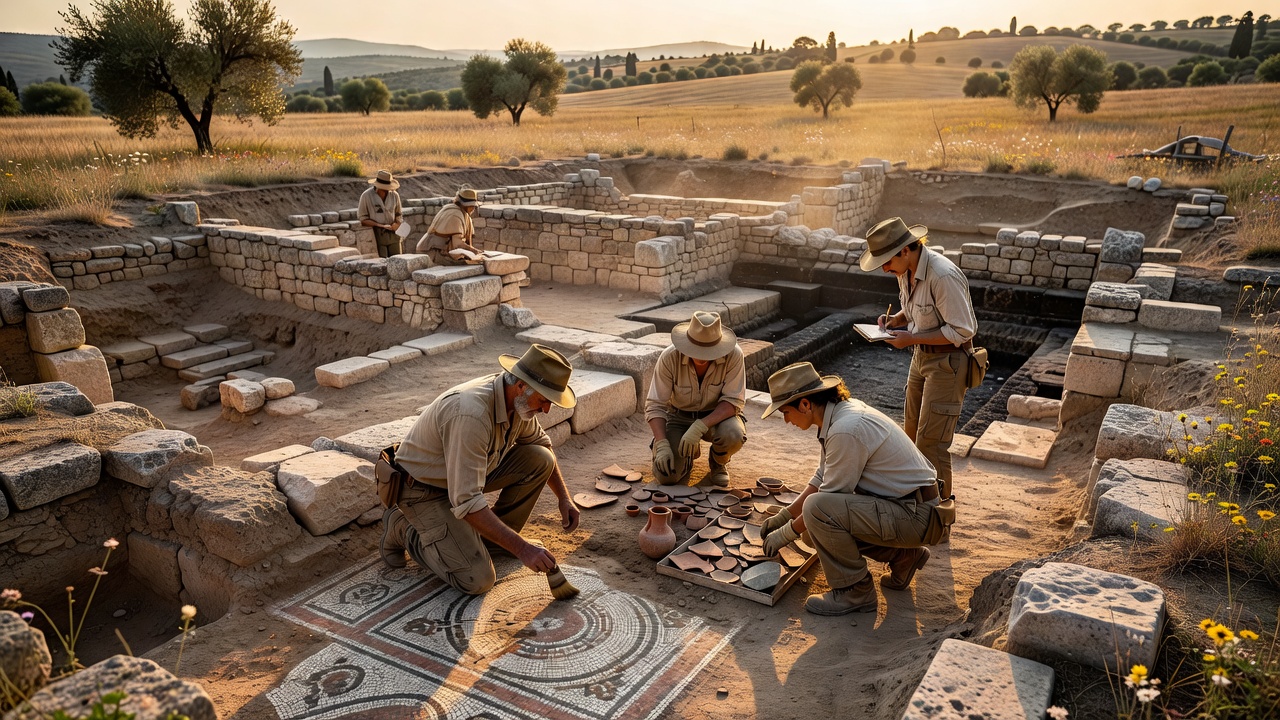
Archaeologists have uncovered the remains of a Roman villa dating to the second century AD near Felora. The site lies on agricultural land and was identified during routine surveys before construction work. A multinational team has been excavating since last year and has mapped several rooms, a courtyard, and service buildings.
Initial finds include mosaic floors, fragments of wall painting, and ceramic vessels used for storing olive oil and wine. Coins and stamped tiles point to occupation between 150 and 250 AD. The layout follows standard Roman villa plans with a residential wing and agricultural facilities.
Excavation Findings
Among the most notable discoveries is a hypocaust heating system beneath the main reception room. Archaeologists also recovered bronze tools, glassware, and marble fragments that likely belonged to decorative fountains. Soil samples show evidence of grape cultivation and grain processing, suggesting the estate produced goods for local markets and possibly for export. Carbon dating of charcoal from a kitchen hearth confirms activity in the mid-second century. The team continues to remove layers of soil carefully to preserve fragile wall plaster and wooden beams.
Conservation specialists are documenting each artifact on site before transfer to a regional laboratory. Preliminary studies indicate the villa belonged to a prosperous family engaged in mixed farming and trade. Further geophysical surveys have identified additional structures nearby that may form part of the same estate.
Impact on Cultural Heritage
The discovery provides new information about Roman settlement patterns in the Felora region. Historians believe the villa served as an administrative and economic hub linking rural production to nearby towns. Local heritage authorities have placed temporary protection over the area and are discussing long-term preservation measures, including possible public access once excavation concludes. The finds will eventually be exhibited in Felora's cultural museum to illustrate daily life under Roman rule. Researchers expect the project to continue for at least two more seasons, yielding additional data on architecture, diet, and trade networks of the period.